
Introduction
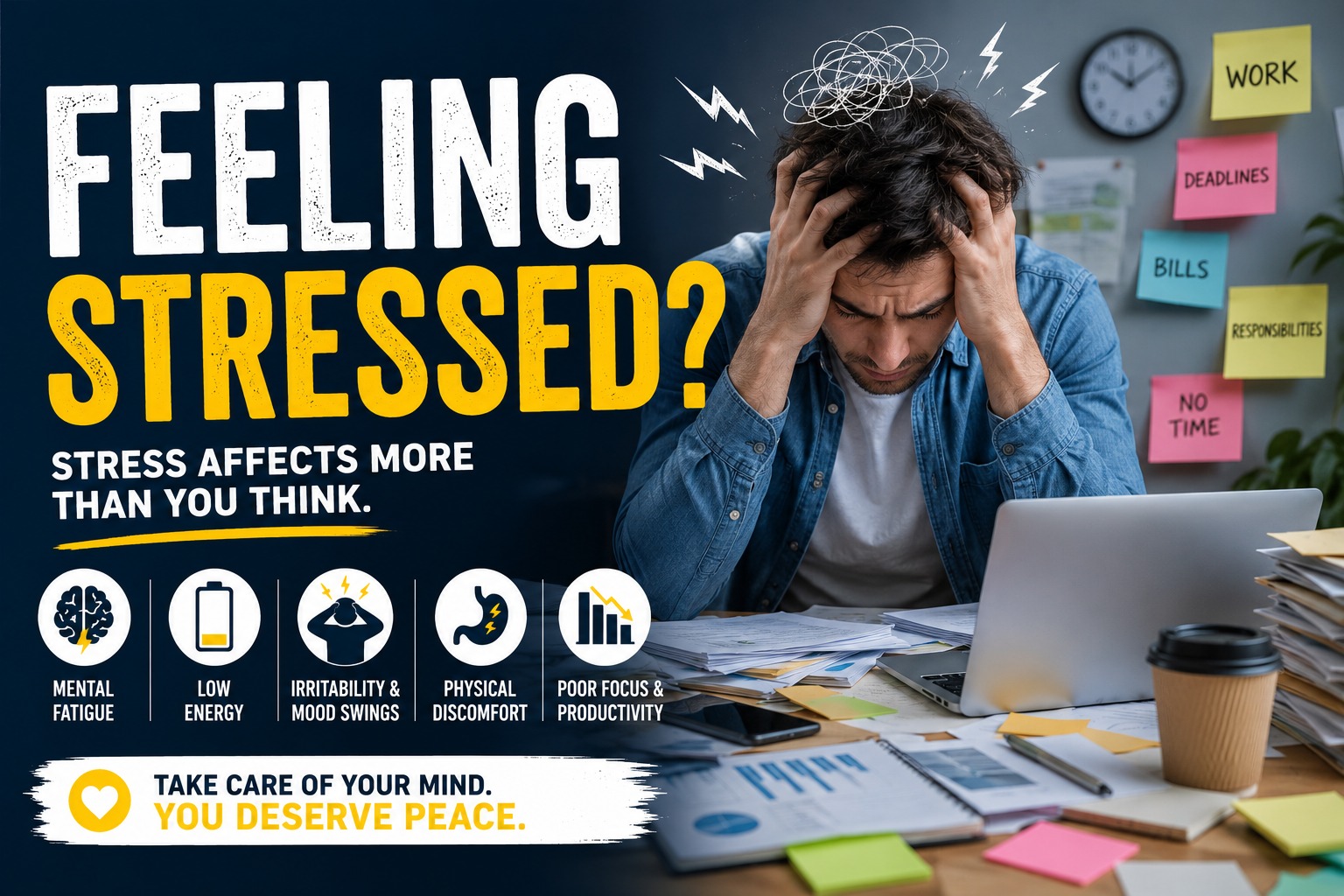
Stress is something most people experience almost every day. It can come from work, school,
finances, relationships, or even just trying to keep up with life.
In small amounts, stress is normal. But when it becomes constant, it can start to affect how
you think, feel, and go about your daily routine.
The tricky part is that stress doesn’t always show up in obvious ways. Sometimes, it quietly
affects your energy, mood, and habits without you realizing it.
Let’s take a closer look at how stress can impact your daily life—and what you can do about
it.
- It Drains Your Energy
One of the first things you may notice is feeling constantly tired.
Relatable example:
You wake up already feeling exhausted, even before your day begins. By afternoon, you feel
completely drained—even if you haven’t done much physically.
Stress can make your body feel like it’s always “on,” which uses up your energy faster than
usual.
What you can do:
Take short breaks during the day, even if it’s just a few minutes to rest or step away from
what you’re doing. - It Affects Your Focus
Stress can make it harder to concentrate and stay on track.
Relatable example:
You sit down to work or study, but your mind keeps jumping from one thought to another.
Simple tasks take longer than usual.
Your mind is busy processing stress, leaving less room for focus.
What you can do:
Break tasks into smaller steps and focus on one thing at a time. - It Changes Your Mood
Stress doesn’t just affect your body—it also affects how you feel emotionally.
Relatable example:
You find yourself getting irritated easily or reacting more strongly to small situations that
normally wouldn’t bother you.
Your emotional balance is affected when stress builds up.
What you can do:
Give yourself time to pause before reacting. Even a few deep breaths can help you respond
more calmly. - It Can Disrupt Your Sleep
Stress often follows you into the night.
Relatable example:
You lie in bed thinking about everything you need to do, replaying conversations, or
worrying about the next day.
Your mind stays active when it should be resting.
What you can do:
Create a simple bedtime routine to help your mind slow down—like reducing screen time or
sitting quietly before sleep. - It Affects Your Eating Habits
Stress can change how and when you eat.
Relatable example:
You may skip meals because you’re too busy or stressed, or you may find yourself eating
more than usual without noticing.
Stress can disrupt your normal eating patterns.
What you can do:
Try to stay aware of your eating habits and maintain regular meals, even on busy days. - It Reduces Your Motivation
When stress builds up, even simple tasks can feel overwhelming.
Relatable example:
You know what you need to do, but you keep putting it off because you feel mentally drained.
Your mind and body are overloaded, making it harder to take action.
What you can do:
Start with small tasks. Completing even one thing can help you regain momentum. - It Affects Your Overall Wellbeing
When stress becomes constant, it can affect different parts of your daily life at once—your
energy, mood, sleep, and habits.
Relatable example:
You feel tired, distracted, and unmotivated all at the same time, without fully understanding
why.
Your body is trying to cope with ongoing pressure.
What you can do:
Take time to slow down. Even small moments of rest and reflection can help you reset.
Simple Ways to Manage Stress Daily
You don’t need complicated solutions to manage stress. Small, consistent actions can make a
big difference.
● Take short breaks during the day
● Move your body, even if it’s just a walk
● Get enough rest
● Talk to someone you trust
● Give yourself time to relax
Conclusion
Stress is a part of life, but it doesn’t have to control your daily experience.
By paying attention to how it shows up—and taking small steps to manage it—you can create
a more balanced and calmer routine.
You don’t have to fix everything at once. Start with one small change and build from there.
What is one simple thing you can do today to reduce your stress?
Leave a Reply