
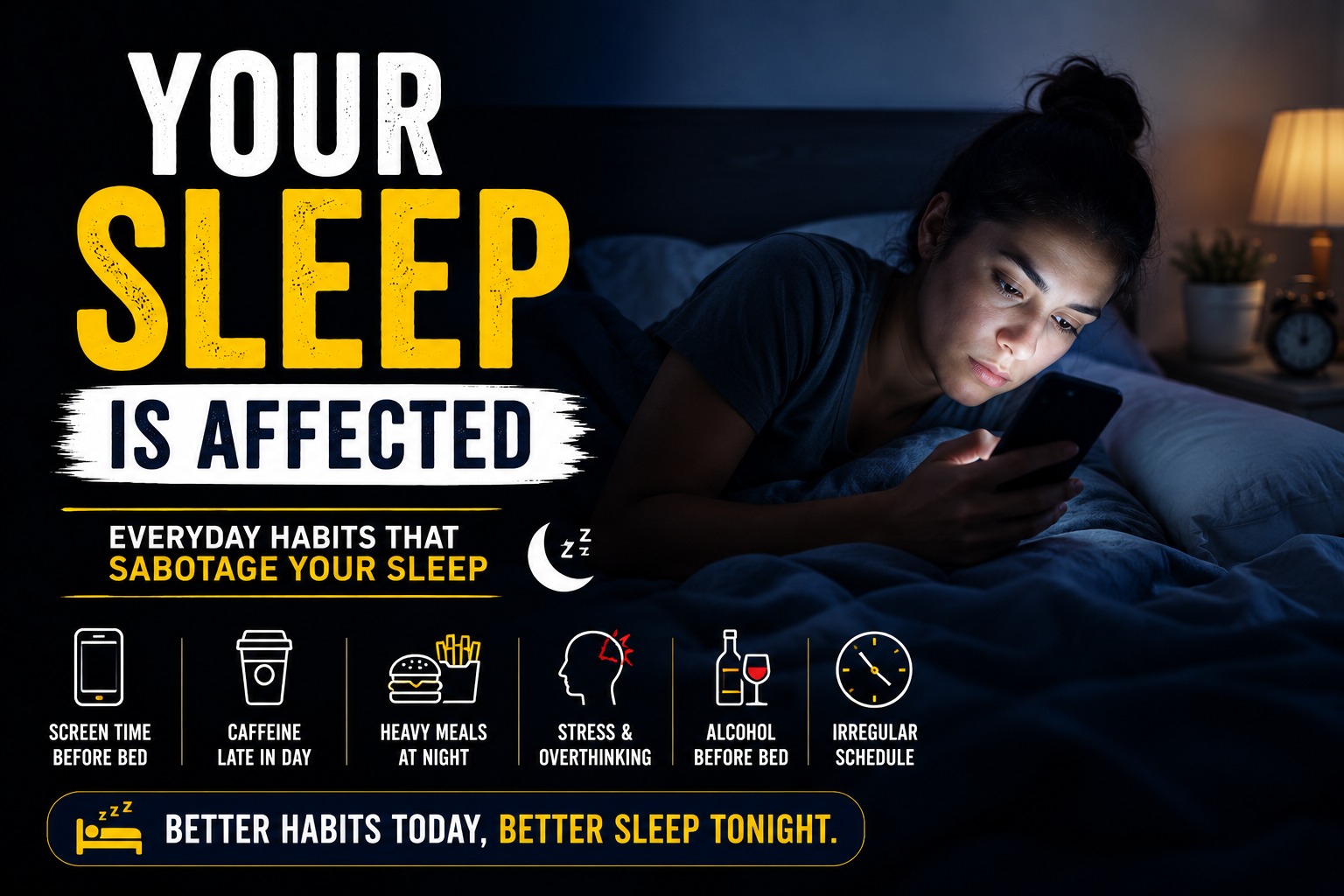
Introduction
Sleep is one of the most important parts of your daily routine, yet many people struggle to get
quality rest.
You might go to bed on time, spend enough hours in bed, and still wake up feeling tired. If
that happens often, your daily habits could be playing a bigger role than you realize.
The truth is, it’s not just about how long you sleep—it’s also about what you do before and
throughout your day.
Let’s look at some everyday habits that may be quietly affecting your sleep.
- Using Your Phone Right Before Bed
One of the most common habits is scrolling through your phone at night.
Relatable example:
You lie in bed planning to sleep, but decide to check your phone “for a few minutes.” Before
you know it, a long time has passed, and your mind is still active.
Screen light can make it harder for your body to relax and prepare for sleep.
What you can do:
Try putting your phone away at least 30 minutes before bed and allow your mind to slow
down. - Drinking Caffeine Too Late
Caffeine can stay in your system longer than you might expect.
Relatable example:
You take coffee or a caffeinated drink in the evening, thinking it won’t matter—but later, you
find it harder to fall asleep.
Your body may still feel alert when it should be winding down.
What you can do:
Limit caffeine intake later in the day, especially in the evening. - Irregular Sleep Schedule
Going to bed at different times each night can confuse your body.
Relatable example:
You sleep early one night and very late the next. By the end of the week, your sleep pattern
feels completely off.
Your body struggles to maintain a steady rhythm.
What you can do:
Try to sleep and wake up at consistent times every day. - Eating Heavy Meals Before Bed
What you eat at night can affect how well you sleep.
Relatable example:
You eat a large meal late at night and go straight to bed, only to feel uncomfortable or
restless.
Your body is still active digesting food when it should be resting.
What you can do:
Eat earlier in the evening and keep nighttime meals light. - Lack of Physical Activity
Your body needs movement during the day to feel ready for rest at night.
Relatable example:
After a day of sitting with little movement, you may not feel naturally tired at bedtime.
Your body hasn’t used enough energy to fully relax.
What you can do:
Include simple activities like walking or stretching in your daily routine. - Stress and Overthinking
Your mind plays a big role in how well you sleep.
Relatable example:
You lie down to sleep, but your mind starts replaying events or worrying about the next day.
Your mind remains active, making it harder to fall into deep rest.
What you can do:
Take a few minutes before bed to relax, breathe deeply, or clear your thoughts. - Too Much Daytime Napping
Naps can be helpful, but too much can affect your nighttime sleep.
Relatable example:
You take a long nap during the day, then struggle to fall asleep at night.
Your body isn’t ready for sleep later because it has already rested.
What you can do:
Keep naps short and avoid sleeping too late in the day. - Sleeping Environment
Your surroundings can affect how well you sleep.
Relatable example:
Noise, light, or an uncomfortable bed can make it difficult to stay asleep.
Your body may not fully relax in an uncomfortable environment.
What you can do:
Make your sleeping space as calm and comfortable as possible.
Conclusion
Sleep is not just about going to bed—it’s influenced by the habits you build throughout your
day.
Small things like screen time, eating habits, and your daily routine can have a big impact on
how well you rest.
The good news is that these habits are within your control. By making small adjustments, you
can improve your sleep and wake up feeling more refreshed.
Which of these habits might be affecting your sleep right now?
Leave a Reply