
Introduction
Social media has become a big part of everyday life. From scrolling through updates to
watching videos and connecting with others, it’s something many people use daily without
thinking twice.
While it can be entertaining and useful, spending too much time on social media—or using it
in certain ways—can quietly affect how you feel.
Sometimes, you may not even realize the impact until it starts showing in your mood, focus,
or daily habits.
Let’s take a closer look at how social media can affect your mental wellbeing and what you
can do to manage it better.
- It Can Affect How You Compare Yourself to Others
Social media often shows the best moments of people’s lives.
Relatable example:
You scroll through posts and start feeling like others are doing better, achieving more, or
living a more exciting life than you.
You may be comparing your real life to someone else’s highlights.
What you can do:
Remind yourself that what you see online is not always the full picture. - It Can Reduce Your Focus
Constant notifications and endless scrolling can make it harder to concentrate.
Relatable example:
You pick up your phone “for a minute,” and suddenly a lot of time has passed without you
realizing it.
Your attention keeps shifting, making it harder to stay focused on important tasks.
What you can do:
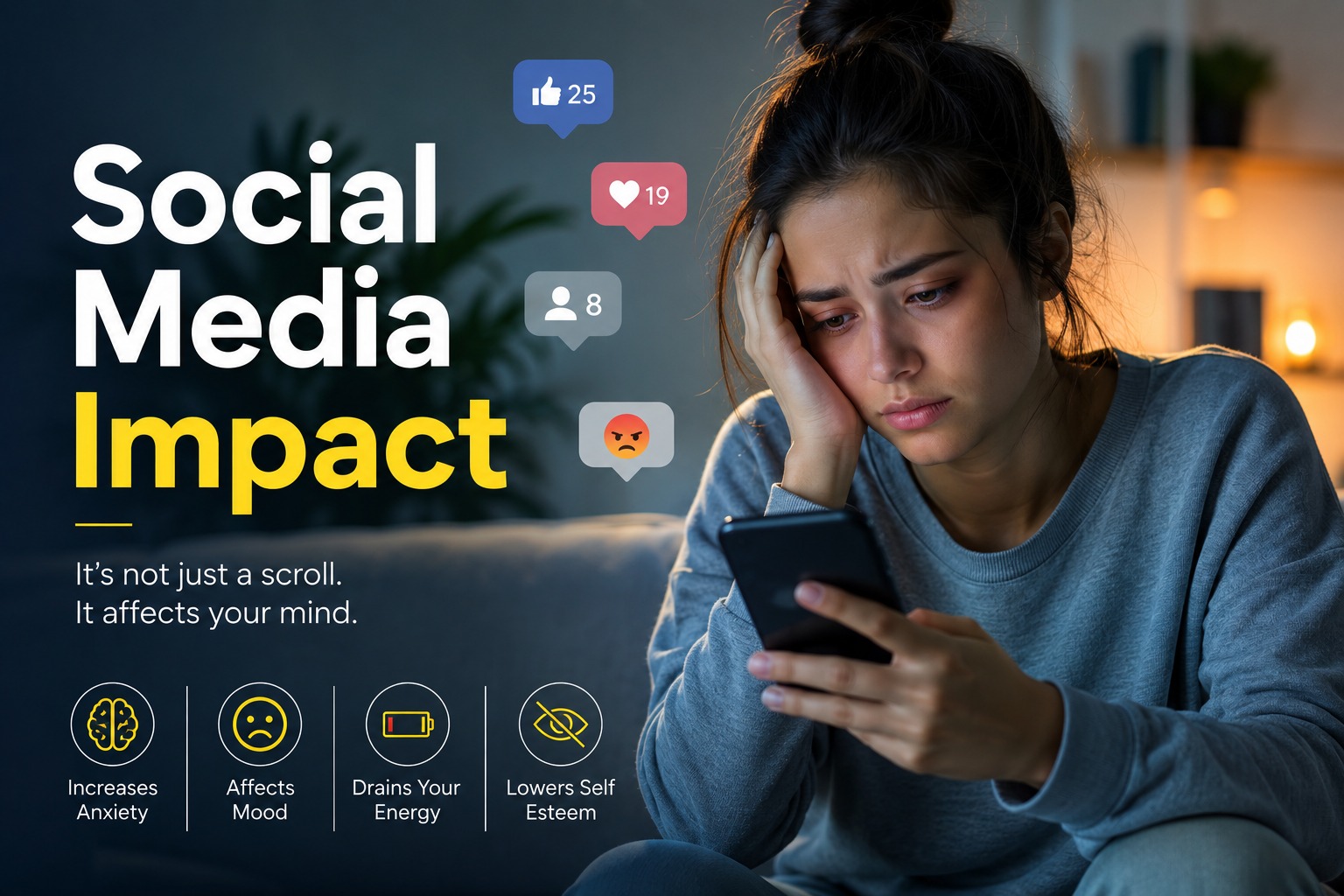
Set limits on when and how long you use social media. - It Can Affect Your Mood
What you see online can influence how you feel.
Relatable example:
After spending time scrolling, you may feel drained, irritated, or less motivated.
Too much information and comparison can affect your emotional state.
What you can do:
Be mindful of how certain content makes you feel and take breaks when needed. - It Can Disrupt Your Sleep
Using social media late at night can affect your rest.
Relatable example:
You plan to sleep, but end up scrolling for a long time. The next morning, you feel tired and
less refreshed.
Your mind stays active when it should be winding down.
What you can do:
Avoid using social media right before bed. - It Can Reduce Real-Life Interaction
Spending too much time online can reduce time spent with people in real life.
Relatable example:
You spend hours online but feel disconnected when it comes to real conversations.
Online interaction replaces real-life connection.
What you can do:
Make time to talk, connect, and spend time with people offline. - It Can Create a Habit of Constant Checking
Social media can become something you check without thinking.
Relatable example:
You reach for your phone automatically, even when there’s no real reason.
It becomes a habit that’s hard to control.
What you can do:
Be intentional about when you use your phone. - It Can Affect Your Self-Perception
Seeing filtered or edited content can change how you see yourself.
Relatable example:
You compare your appearance or lifestyle to what you see online and feel less confident.
Unrealistic standards can influence how you think about yourself.
What you can do:
Focus on your own progress and avoid comparing yourself too much.
Simple Ways to Use Social Media in a Healthier Way
You don’t have to stop using social media completely. It’s about using it in a balanced way.
● Set time limits for usage
● Take regular breaks
● Avoid using it before bed
● Follow content that makes you feel positive
● Spend more time on real-life activities
Conclusion
Social media is a powerful tool, but how you use it matters.
When used without awareness, it can affect your mood, focus, and overall wellbeing. But
with small changes, you can create a healthier balance.
The goal isn’t to quit—it’s to use it in a way that supports your daily life instead of affecting
it negatively.
How does social media affect your daily routine?
Leave a Reply