
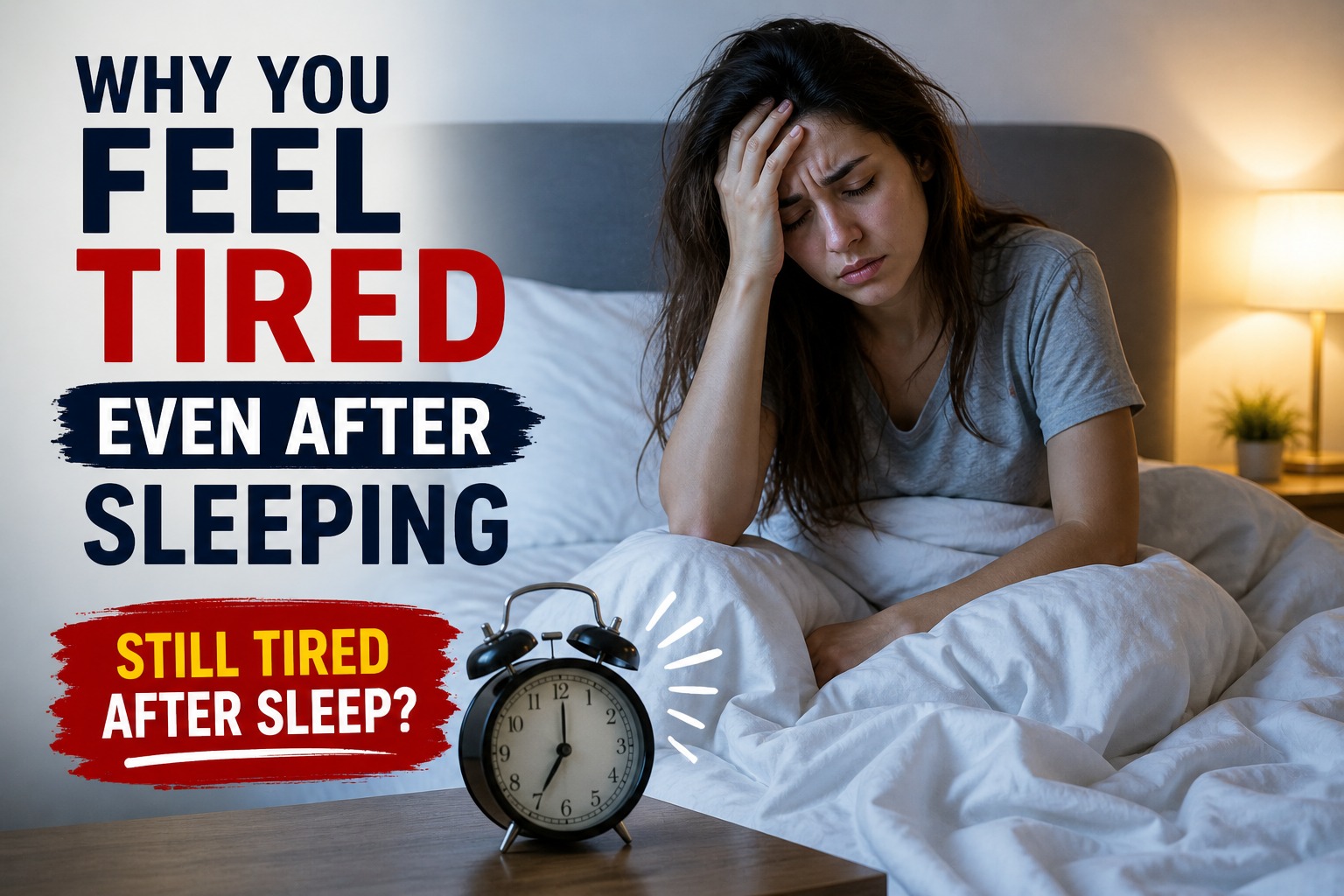
Introduction
You go to bed, sleep for hours, and wake up expecting to feel refreshed. But instead, you still
feel tired, slow, and unmotivated.
If this sounds familiar, you’re not alone.
Many people assume that getting enough sleep automatically means they’ll feel energized.
But the truth is, it’s not just about how long you sleep—it’s also about the quality of your
sleep and the habits surrounding it.
Let’s explore some common reasons why you might still feel tired even after a full night’s
rest.
Dehydration
Many people overlook how hydration affects energy levels.
When your body doesn’t get enough water, it can make you feel sluggish—even after
sleeping.
Relatable example:
You wake up feeling tired and think you need more sleep, but after drinking water, you start
to feel more awake.
What you can do:
Stay hydrated throughout the day and drink a little water after waking up.
Conclusion
Feeling tired after sleeping can be frustrating, especially when you believe you’re doing
everything right.
But often, it’s not about sleeping more—it’s about improving the habits around your sleep.
Small changes, like reducing screen time, keeping a consistent routine, and managing stress,
can make a big difference in how you feel each morning.
You don’t need to fix everything overnight. Start with one change and build from there.
So ask yourself—what might be affecting your sleep without you realizing it?
Poor Sleep Quality
You might be in bed for 7–8 hours, but that doesn’t always mean your body is getting deep,
restful sleep.
If your sleep is frequently interrupted—by noise, light, or even your own thoughts—your
body may not fully recharge.
Relatable example:
You go to bed at 10 PM and wake up at 6 AM, but you remember waking up multiple times
during the night. Even though you “slept enough,” you still feel exhausted in the morning.
What you can do:
Create a calm sleeping environment. Reduce noise, dim the lights, and make your bed as
comfortable as possible.
Using Your Phone Late at Night
Scrolling through your phone before sleeping has become a habit for many people. While it
feels relaxing, it can actually make it harder for your body to wind down.
The light from your screen can delay your natural sleep rhythm, making your sleep less
effective.
Relatable example:
You tell yourself “just 5 minutes” on social media, but it turns into 45 minutes. By the time
you sleep, your mind is still active—and you wake up feeling like you didn’t rest properly.
What you can do:
Set a simple rule: no phone 30 minutes before bed. Replace it with something calming like
listening to soft music or sitting quietly.
Irregular Sleep Schedule
Sleeping at different times every night can confuse your body.
Your body works best with consistency. When your sleep time keeps changing, it becomes
harder for your body to maintain a natural rhythm.
Relatable example:
You sleep at 10 PM on weekdays, but stay up until 2 AM on weekends. By Monday morning,
your body feels completely out of sync—even if you slept “enough.”
What you can do:
Try to sleep and wake up at the same time every day, including weekends.
Mental Stress and Overthinking
Your body may be lying down, but your mind might still be very active.
Stress, worry, or overthinking can prevent your body from entering a deep, restful state.
Relatable example:
You go to bed, but instead of sleeping, you’re thinking about work, money, or things you
need to do tomorrow. You eventually fall asleep—but wake up feeling mentally tired.
What you can do:
Clear your mind before bed. You can write down your thoughts or simply take a few minutes
to relax and breathe deeply.
Lack of Physical Activity
When your body doesn’t move enough during the day, it may not feel ready to rest at night.
Physical activity helps your body use energy in a healthy way, making it easier to fall into
deeper sleep.
Relatable example:
You spend most of your day sitting—working, watching videos, or scrolling. At night, you
don’t feel sleepy, and even when you sleep, it doesn’t feel refreshing.
What you can do:
Add simple movement into your day. Even a short walk can help your body feel more
balanced and ready for rest.
Poor Eating Habits Before Bed
What you eat—and when you eat—can affect how you sleep.
Heavy meals or late-night snacking can make your body stay active when it should be resting.
Relatable example:
You eat a heavy meal late at night, go straight to bed, and wake up feeling uncomfortable or
tired instead of refreshed.
What you can do:
Try to eat earlier in the evening and avoid heavy meals right before bedtime.
Leave a Reply