
Introduction
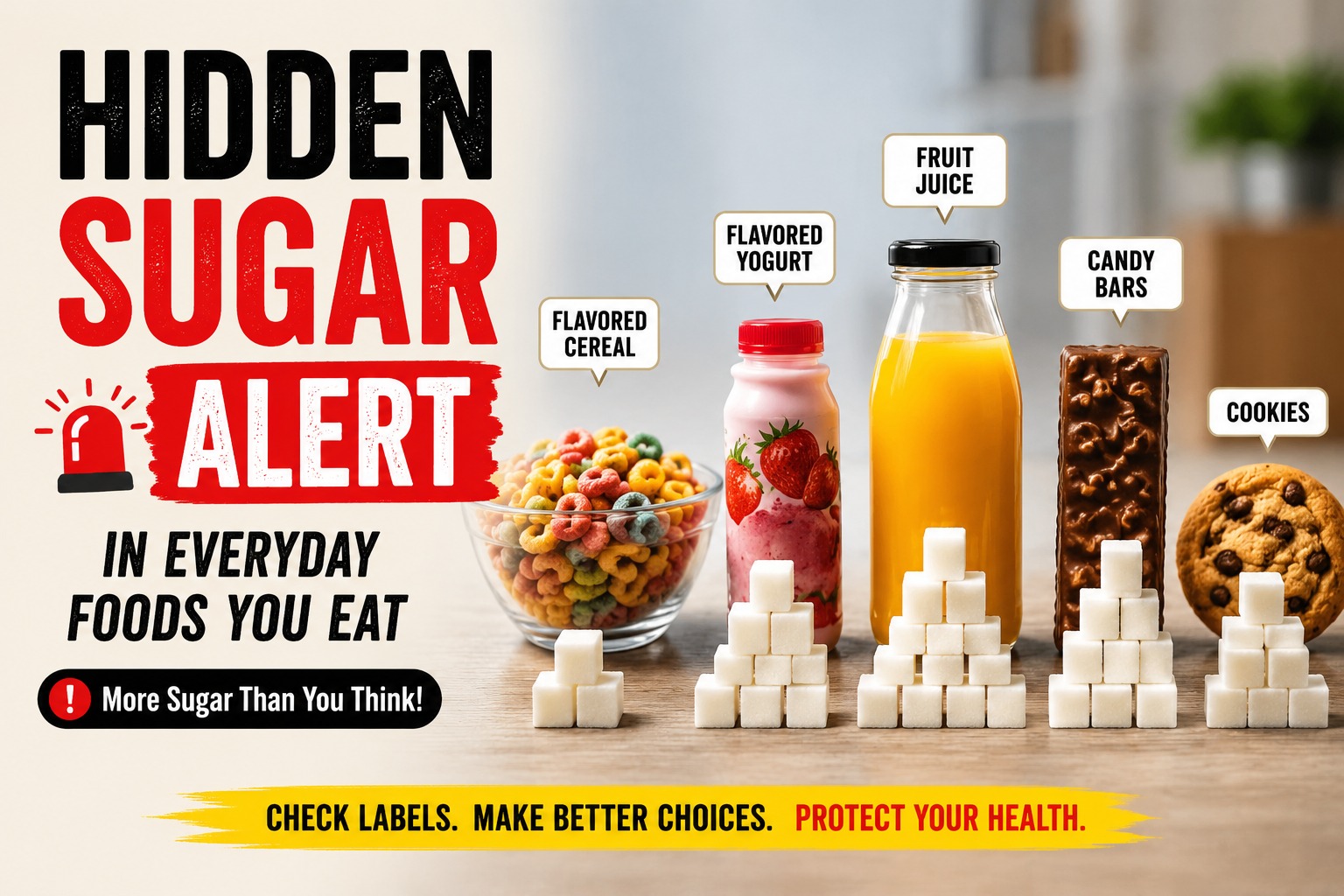
When people think about sugar, they often picture sweets like candy, chocolate, or soft drinks. But
what many don’t realize is that sugar can be found in a lot of everyday foods—even the ones that
don’t taste very sweet.
These “hidden sugars” can quietly add up throughout your day without you noticing. And over
time, they may affect your energy levels, eating habits, and overall wellbeing.
The goal isn’t to avoid sugar completely—it’s to become more aware of where it shows up.
Let’s take a look at some common foods that may contain more sugar than you expect.
- Breakfast Cereals
Many cereals are marketed as a quick and easy way to start the day. But some of them contain
added sugars that can be surprisingly high.
Even cereals that appear “healthy” can still have sweeteners mixed in.
Relatable example:
You pour a bowl of cereal in the morning thinking it’s a light, healthy choice. But shortly after
eating, you feel hungry again or experience a drop in energy.
What you can do:
Check the label when possible and look for options with less added sugar, or balance your meal
with other foods. - Flavored Yogurt
Yogurt is often seen as a healthy snack, but flavored versions can contain added sugar to improve
taste.
Relatable example:
You grab a strawberry-flavored yogurt thinking it’s a healthy option, but it tastes more like dessert
than a simple snack.
What you can do:
Choose plain yogurt when possible and add natural flavor like fruits. - Packaged Fruit Juices
Fruit juice sounds like a healthy choice, but many packaged versions contain added sugar or
concentrated sweeteners.
Relatable example:
You drink a glass of juice thinking it’s as healthy as eating fruit, but it doesn’t keep you full—and
you may still feel hungry soon after.
What you can do:
Whenever possible, go for whole fruits instead of processed juice. - Bread and Baked Goods
Bread doesn’t usually taste sweet, but some types contain added sugar as part of the recipe.
Relatable example:
You eat bread daily and never think of it as a source of sugar, but over time, those small amounts
can add up.
What you can do:
Be mindful of portion sizes and try different types of bread if available. - Sauces and Condiments
Ketchup, salad dressings, and other sauces can contain hidden sugars to enhance flavor.
Relatable example:
You add sauce to your meal without thinking, but it may contain more sugar than you expect.
What you can do:
Use sauces in moderation and be aware of how often you add them to your meals. - Snack Foods
Packaged snacks like biscuits, granola bars, and chips can include added sugars—even when they
don’t taste overly sweet.
Relatable example:
You eat snacks throughout the day without realizing how quickly the sugar intake can build up.
What you can do:
Try balancing snacks with more natural options when possible. - Soft Drinks and Sweetened Beverages
This is one of the most obvious sources, but still worth mentioning because of how common it is.
Relatable example:
Drinking soft drinks regularly might seem normal, but they can contain a large amount of sugar in
a single serving.
What you can do:
Reduce how often you drink sweetened beverages and replace them with water when you can.
Why Hidden Sugar Matters
The challenge with hidden sugar isn’t just one food—it’s the combination of many small sources
throughout the day.
You might not notice it immediately, but over time, it can affect:
● Your energy levels
● How often you feel hungry
● Your overall eating habits
Becoming aware is the first step to making better choices.
Conclusion
Sugar isn’t always obvious. It can be found in foods you eat every day—sometimes without a
strong sweet taste.
The goal isn’t to remove everything at once, but to become more mindful of what you’re
consuming.
Small changes, like checking labels, choosing simpler options, and reducing certain foods, can
make a difference over time.
Take a moment to think—where might hidden sugar be showing up in your daily routine?
Leave a Reply