
Introduction
There are days when you feel tired, unmotivated, or just not yourself. At first, it might seem like
normal stress or a busy schedule.
But when that feeling doesn’t go away—even after rest—it could be something more.
Burnout doesn’t usually happen all at once. It builds up slowly over time, often going unnoticed
until it starts affecting your energy, focus, and daily life.
Understanding the signs can help you take a step back and make the changes you need.
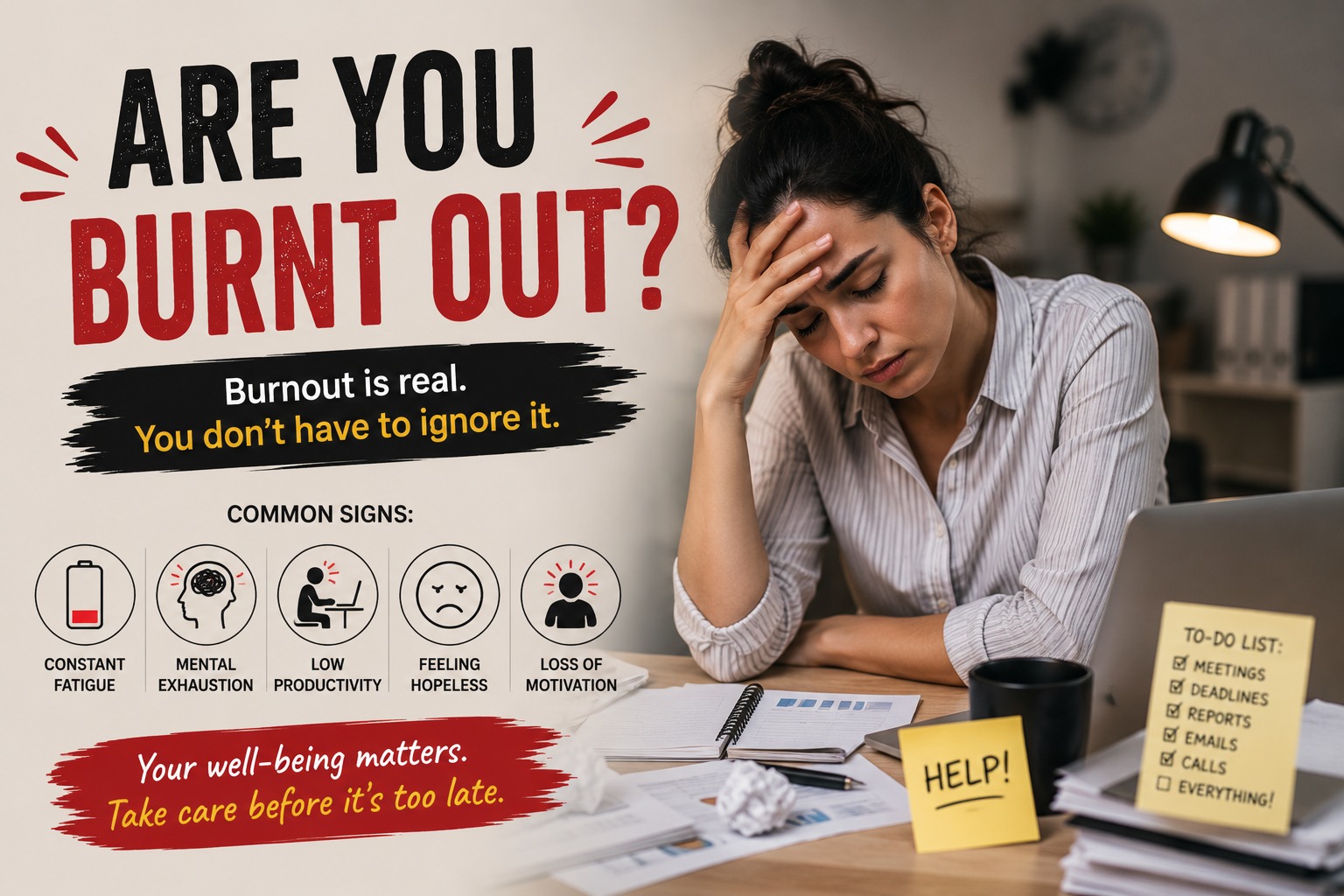
Let’s look at some common signs that you may be experiencing burnout.
- Constant Fatigue
One of the most noticeable signs is feeling tired all the time.
Relatable example:
You wake up feeling exhausted, go through the day with low energy, and still feel drained even
after resting.
Your body and mind may be overwhelmed from ongoing stress.
What you can do:
Give yourself time to rest and avoid pushing yourself beyond your limits. - Lack of Motivation
Things that used to feel easy or enjoyable may now feel like a burden.
Relatable example:
Tasks you normally handle without stress now feel overwhelming, and you keep putting them off.
Your mental energy is low, making it harder to stay motivated.
What you can do:
Start small. Focus on completing one simple task at a time. - Difficulty Concentrating
Burnout can affect how clearly you think.
Relatable example:
You sit down to work or study but find it hard to focus or remember things.
Your mind may be overloaded and needs a break.
What you can do:
Take short breaks and reduce distractions when working. - Feeling Easily Irritated
You may notice changes in how you react to situations.
Relatable example:
Small things that wouldn’t normally bother you suddenly feel frustrating or overwhelming.
Emotional exhaustion can affect your patience and mood.
What you can do:
Pause before reacting and give yourself time to calm down. - Loss of Interest in Activities
Things you once enjoyed may no longer feel exciting.
Relatable example:
Activities you used to look forward to now feel like something you don’t have the energy for.
Burnout can reduce your sense of enjoyment.
What you can do:
Give yourself space to rest and gradually reintroduce activities you enjoy. - Changes in Sleep Patterns
Burnout can affect how you sleep.
Relatable example:
You may struggle to fall asleep, wake up often, or feel tired even after sleeping.
Your mind may still be active when your body needs rest.
What you can do:
Create a consistent sleep routine and give your mind time to relax before bed. - Feeling Overwhelmed
Everything may start to feel like too much.
Relatable example:
Even simple tasks feel difficult because you feel mentally overloaded.
Your stress levels may be too high for your body to manage comfortably.
What you can do:
Break tasks into smaller steps and focus on one thing at a time. - Withdrawing from Others
You may start pulling away from people around you.
Relatable example:
You avoid conversations, social activities, or spending time with others because you feel drained.
You may be trying to conserve your energy.
What you can do:
Stay connected in small ways—even a short conversation can help.
Conclusion
Burnout is more than just feeling tired—it’s a sign that your body and mind need attention and care.
The good news is that recognizing the signs is the first step toward making positive changes.
You don’t have to fix everything at once. Start by giving yourself time to rest, slow down, and
rebuild your energy gradually.
Do any of these signs feel familiar to you right now?
Leave a Reply